An Art Nouveau walk in Riga is a different hour from the Old Town circuit. The free walking tours that meet by St Peter’s stay inside the old walls. The facades people cross the city to photograph sit just north of the canal parks, on Alberta iela and the streets that touch it. This site does not run the walk, and it does not sell museum entry.
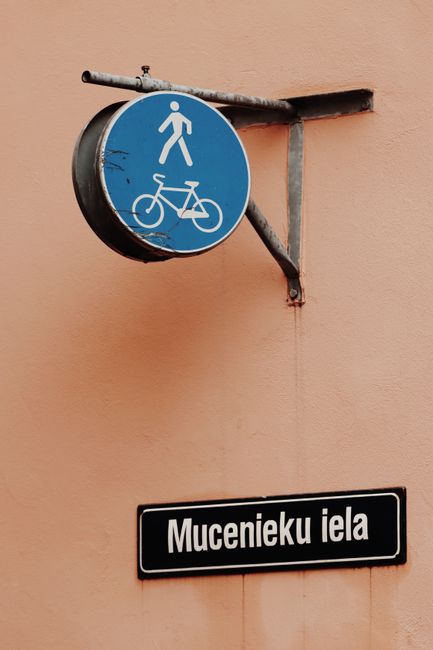
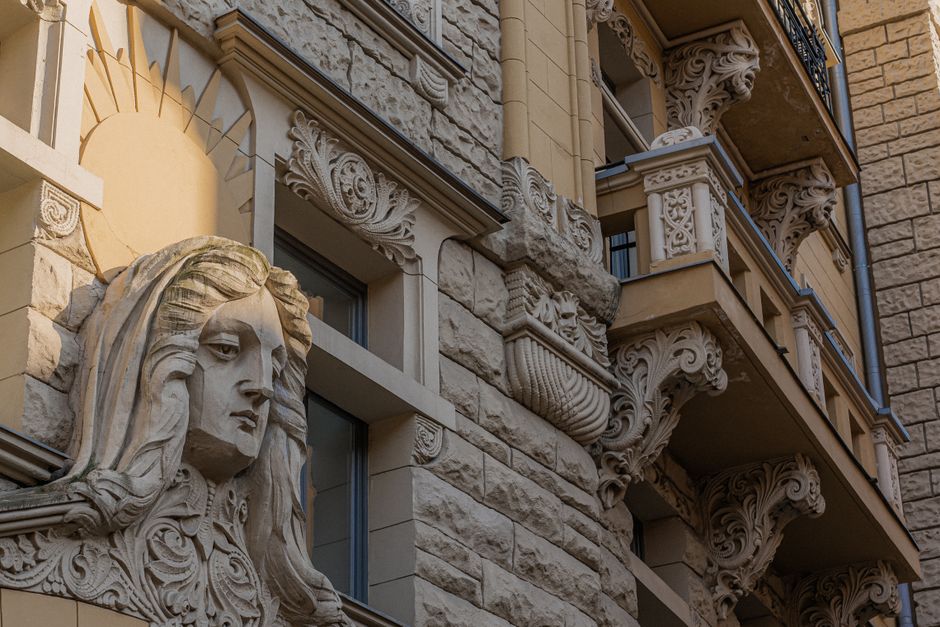
Alberta iela takes its name from Bishop Albert, the medieval founder of the city. The street itself is a product of the first years of the twentieth century, when Riga was rich, growing, and building apartment houses as if the ornament were the point. It is not a long street. That is the advantage. You can stand in the middle of it and see, in both directions, the decade when the city decided that a doorway could carry a face, a lion, or a pine cone.
What you are looking at
Several of the most crowded facades are by Mikhail Eisenstein. On Alberta iela his houses include numbers 2, 2a, 4, 6, and 8, built between 1903 and 1906, and the separate house at number 13, from 1904. The street fronts are dense with masks, plants, animals, and geometric frames. The courtyard sides are plainer brick. These are apartment houses. People live behind the plaster. Look from the pavement, leave the doorways clear, and do not follow a camera into a stairwell. A staircase that is open is still someone’s route home.
Two of the houses have a literary footnote if you want one. The philosopher Isaiah Berlin spent his early childhood at Alberta iela 2a. Number 13, one of the buildings visitors photograph most, is used by the Riga Graduate School of Law. You are there for the facade, not for a campus tour. A few minutes away, Elizabetes iela 10b is another Eisenstein house from the same years, and it is an easy addition if the first street has not worn you out.
The house you can go inside
Alberta iela 12 is a different kind of stop. Konstantīns Pēkšēns designed it with Eižens Laube, then a student, and the house was finished in 1903 as Pēkšēns’s own. The reliefs use plants and animals from this country: needles, cones, squirrels. It is National Romantic work, not a copy of the Eisenstein houses across the way. Since 2009 the Riga Art Nouveau Museum has occupied his former apartment on the first floor. The staircase is part of what you come to see. So is a set of rooms that still read as a home from that decade: layout, paint, furniture, the ordinary objects of a prosperous Riga household.
Higher in the same building is the museum devoted to the painter Jānis Rozentāls and the writer Rūdolfs Blaumanis. Rozentāls lived and worked here from 1904 to 1915, and the studio is still there. Blaumanis is one of the Latvian writers whose stories sit behind a lot of later prose. You do not need either museum to understand the street. If you go in, check the door on the day. Hours and tickets change, and a blog is the wrong place to promise either. Give the interior the time it asks for, which is often less than people expect, and then go back outside. The street is the larger exhibition.
How to walk it
Start from the Old Town only if you already know the way out. Cross the canal parks and keep going until the streets widen and the buildings become these apartment houses rather than warehouses and churches. A Riga free walking tour of the Art Nouveau district, when one is running, often meets at the steps of the National Opera. That meeting point is a sensible start for a self-guided hour as well. The Opera faces the park. Alberta iela is a walk beyond it, not a turning you will stumble on in the Old Town.
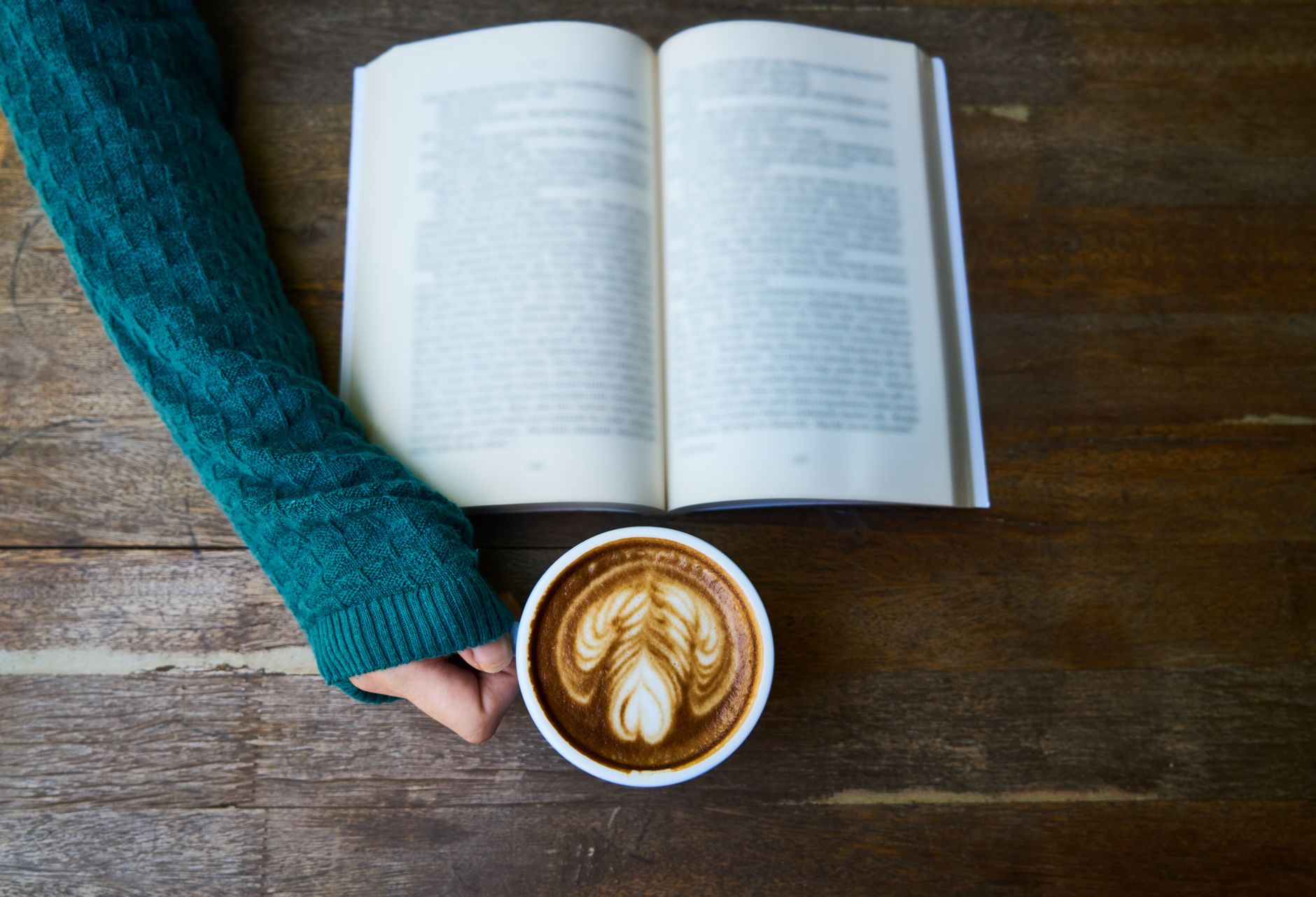
Do the Eisenstein row first, while your eyes are fresh, and leave number 12 until you have seen what the museum is answering. If you want a second street, stay on Elizabetes iela rather than wandering toward the station. The district rewards a loop. It punishes a plan that also includes the market, the library, and three bookshops. Those are other days. The guide to cafés for reading in Riga is the right next step when the looking is done: a table, a book, and a street you can still picture.
Wear shoes you can stand in. Go when the light is clear: a flat grey day swallows the ornament, and sun on a mask or a bay window brings it back. Early morning is quieter than midday, which the people who live on the street will prefer.
Pair it with the Old Town rather than instead of it. The two parts of the centre were built for different centuries. One morning inside the walls, one hour on Alberta iela, and you have the two walks visitors actually come for. You do not need a name for every lion and every face. The hour works when you can find the street again the next day without a map.